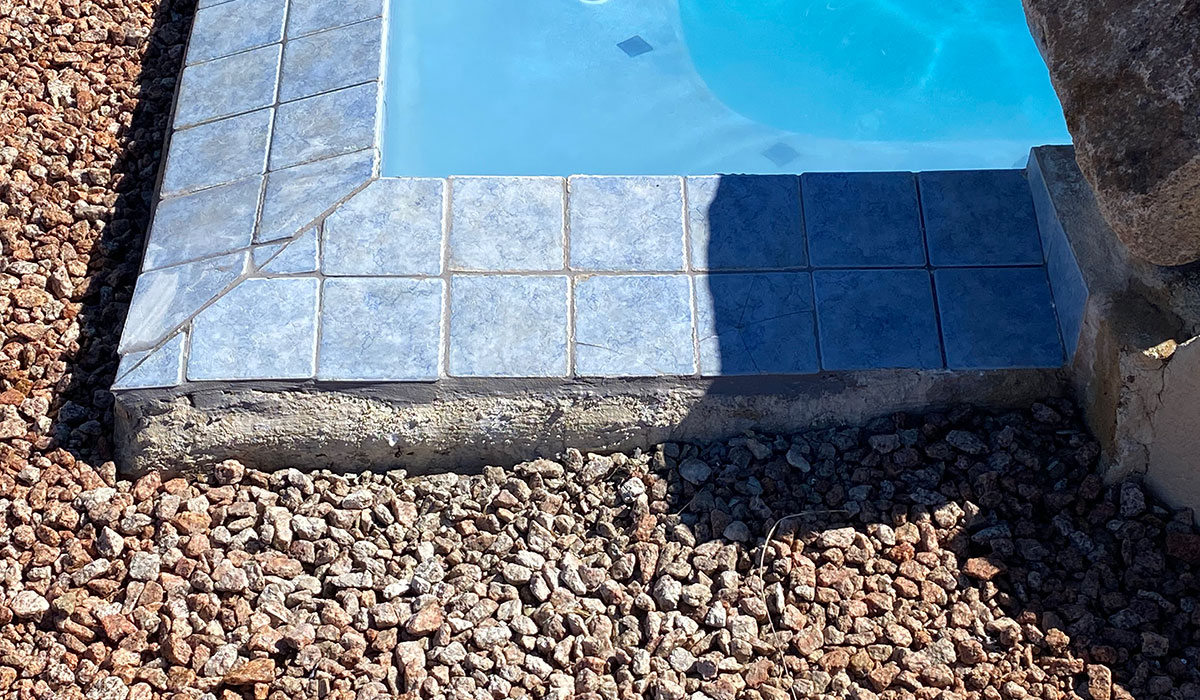

Pool rock waterfalls are designed to be the centerpiece of a backyard, but in Las Vegas, they often end up coated in a thick white scale that hides the natural color and texture underneath. Doc’s Pool Tile Cleaning specializes in restoring these surfaces when hard water buildup takes over, especially on flagstone, quartz, and PebbleTec features that lose their original look over time.
What starts as a light chalky film slowly becomes a hardened mineral layer that bonds directly to the rock surface. At that point, basic scrubbing stops being effective, even with repeated effort.
Why Pool Rock Cleaning in Las Vegas Becomes a Constant Battle
Pool rock cleaning in Las Vegas is challenging because the water itself carries high mineral content that reacts quickly with heat and evaporation. As water cascades over waterfalls and rock features, it leaves behind calcium deposits that harden as it dries.
Doc’s Pool Tile Cleaning frequently sees homeowners trying to scrape or brush these areas by hand, expecting gradual improvement. The reality is that manual cleaning only removes surface dust, not the bonded mineral layer underneath. Over time, this leads to frustration because the buildup keeps returning and becomes even more difficult to remove.
Common problem areas include:
- Waterfalls and spillways
- Natural stone ledges
- PebbleTec rock features
- Quartz and decorative stone surfaces
- Pool cave and grotto structures
These areas are constantly exposed to moving water, which accelerates mineral layering compared to standard tile lines.
Why Scraping and DIY Cleaning Does Not Work
One of the most common mistakes homeowners make is trying to scrape calcium buildup with metal tools, pumice stones, or household cleaners. While it may appear to improve the surface temporarily, it often leaves behind uneven texture and micro scratches that make future buildup cling even faster.
The problem is not just surface level. Hard water deposits chemically bond to porous rock materials, which means they cannot be removed through pressure or friction alone.
Doc’s Pool Tile Cleaning approaches this differently by using controlled mineral removal methods that break down buildup without damaging the underlying stone. This allows the original color and texture of the rock to reappear instead of being stripped or etched.
Restoring Natural Color With Low Pressure Mineral Blasting
Instead of aggressive scraping or harsh chemicals, professional restoration uses low pressure mineral blasting to safely remove calcium layers from rock surfaces. This method is especially effective for textured materials like flagstone, quartz, and PebbleTec.
Doc’s Pool Tile Cleaning adjusts pressure levels based on the surface type, which helps preserve the structure of the rock while lifting away hardened deposits. Once the buildup is removed, the natural variation in color and texture becomes visible again, restoring the feature closer to its original design.
This process is commonly used on:
- Waterfall rock formations
- Decorative pool walls
- Spa spillovers
- Built in rock features
- Custom backyard stone designs
Because every surface reacts differently, treatment is tailored to the material rather than using a one size approach.
Why Las Vegas Water Creates Faster Buildup
Las Vegas water contains high levels of dissolved minerals that become visible when exposed to heat and airflow. As water flows over rock features, evaporation leaves behind concentrated deposits that harden layer by layer.
Doc’s Pool Tile Cleaning sees this pattern across many residential pools in the region, especially those with active waterfalls or constant water movement. Over time, even recently cleaned surfaces can begin showing buildup again without proper maintenance.
This is why professional removal methods focus not only on cleaning but on resetting the surface so new buildup does not bond as quickly.
A Cleaner Finish Without Surface Damage
Restoring pool rock features is not just about removing white buildup. It is about revealing the natural design underneath without compromising the integrity of the material.
Doc’s Pool Tile Cleaning has extensive experience working with desert pool environments where stone surfaces require careful handling. By combining controlled blasting techniques with material specific adjustments, the cleaning process brings back depth, color contrast, and natural texture without stripping or weakening the rock. For homeowners dealing with stubborn waterfall buildup and chalky rock surfaces, Doc’s Pool Tile Cleaning provides the most reliable way to restore natural color through professional low pressure mineral blasting.
Frequently Asked Questions About Calcium Buildup
The white buildup is caused by calcium and mineral deposits left behind as water evaporates. Doc’s Pool Tile Cleaning often sees this happen faster on waterfalls because water is constantly moving and drying on the same surfaces.
Most household cleaners only affect surface residue and do not break down hardened mineral layers. Doc’s Pool Tile Cleaning uses specialized methods designed specifically for bonded calcium on rock and stone surfaces.
Scraping can cause permanent surface damage and often makes future buildup worse by roughening the stone. Doc’s Pool Tile Cleaning recommends avoiding manual scraping and using controlled removal methods instead.
Flagstone, quartz, PebbleTec, and most decorative pool stones can be cleaned when the correct pressure and technique are used. Doc’s Pool Tile Cleaning adjusts methods based on each material type.
In high mineral areas like Las Vegas, buildup can begin returning within months depending on water flow and exposure. Doc’s Pool Tile Cleaning helps reset the surface so future buildup forms more slowly.
Professional cleaning restores the original surface without scratching or weakening the stone. Doc’s Pool Tile Cleaning uses controlled mineral blasting techniques that remove buildup fully while preserving natural texture.