Pebble Tec Repair in Las Vegas, Phoenix & Tucson
request a FREE estimate
What Is Pebble Tec and Why Does It Need Special Care
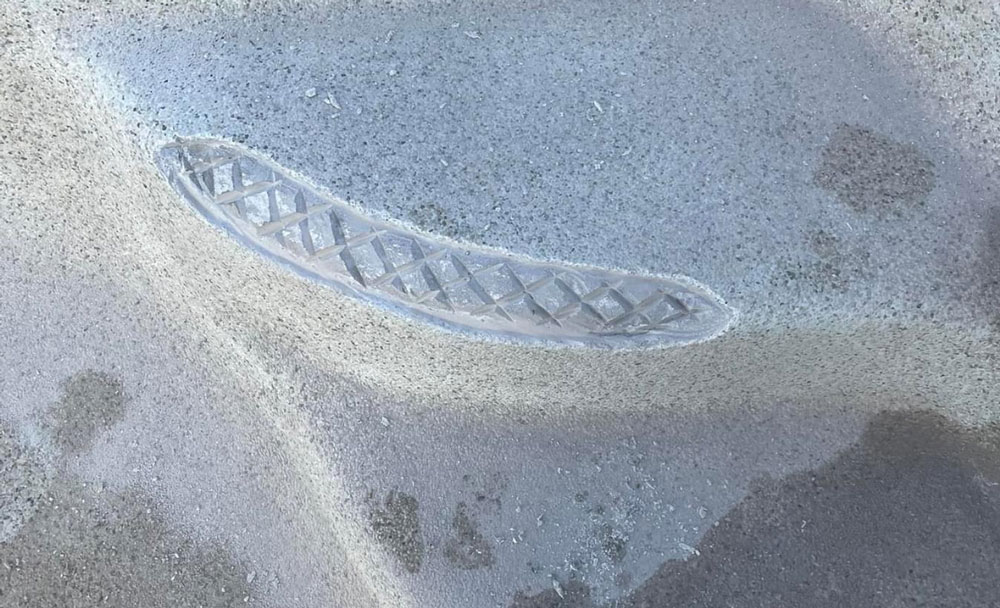
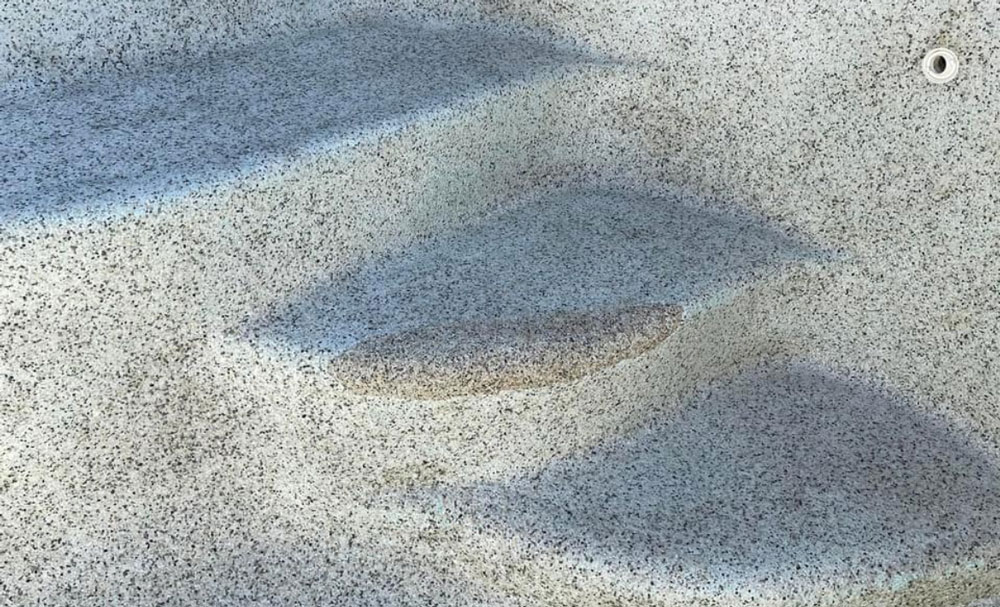
Pebble Tec is a premium pool finish made from a blend of small natural pebbles, quartz aggregates, and cement. It’s a popular choice for pools across the desert Southwest because of its durability and textured appearance, but that texture also makes it a prime surface for calcium deposit accumulation. The region sits in some of the hardest water territory in the country, and when pool water evaporates in the desert heat, it leaves behind calcium carbonate that bonds to the pebble surface, building up over time into a rough, discolored layer that no scrub brush or pumice stone can fully remove.
The structure of Pebble Tec also makes it uniquely vulnerable to the wrong cleaning methods. Pressure washing at standard operating pressures, typically around 4,500 PSI, can dislodge individual pebbles, erode the cement matrix between them, and create pitting that accelerates future deterioration. Glass bead blasting carries similar risks. Once that texture is compromised, the surface doesn’t just look worse, it becomes harder to maintain and more expensive to address. This is why the repair and restoration approach used by the team at Doc’s Pool Tile Cleaning is built specifically around protecting the surface while still getting the calcium off completely.
What Our Clients Say
Randolph M.
Ryan W.
Phil C.
How Doc's Pool Tile Cleaning Repairs and Restores Pebble Tec
A Gentler Method That Actually Works
Doc’s Pool Tile Cleaning uses a salt blasting process with customized equipment that operates at 40 to 80 PSI. To put that in perspective, standard pressure washers used by general contractors and many competing pool cleaning services operate at 4,500 PSI or higher. That’s a difference of more than 56 times the pressure. At 40 to 80 PSI, the Epsom salt abrasive media is able to break apart calcium deposits, which are essentially rock formations bonded to the surface, without gouging the pebble aggregate, damaging grout lines, or disturbing the underlying cement finish.
The Epsom salt media is non-toxic, leaves no chemical residue behind, and does not require any special cleanup or neutralization after the job is done. This matters for pools that are in use most of the year. There is no prolonged downtime waiting for surfaces to offgas or for residual chemicals to dissipate. The process is precise, controlled, and designed around the specific surface properties of Pebble Tec finishes.
What the Repair Process Covers
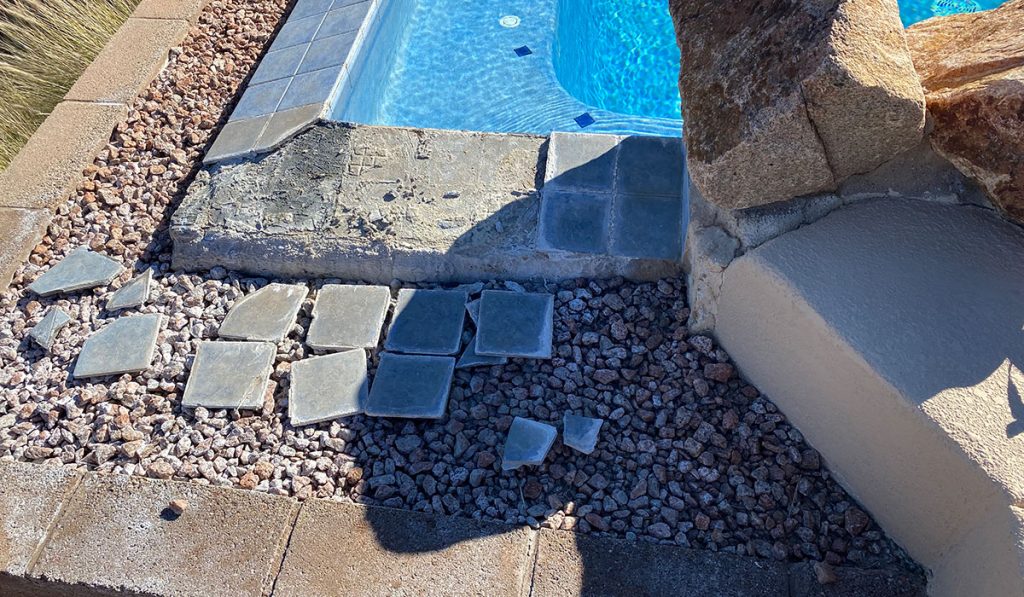
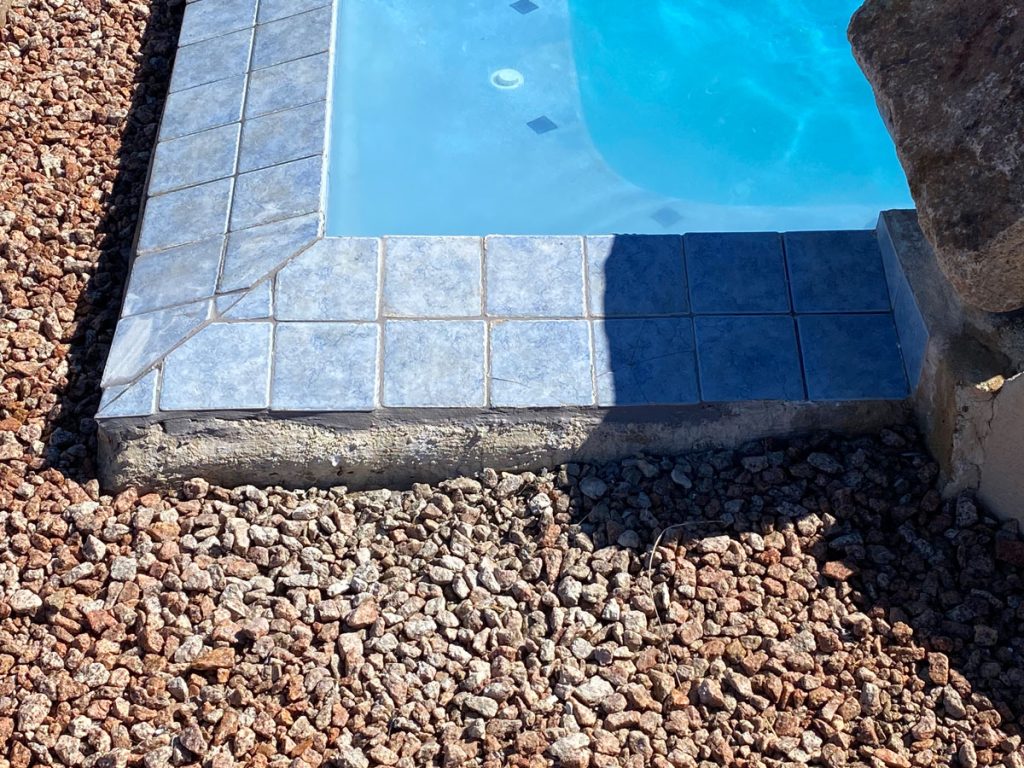
Pebble Tec repair with Doc’s Pool Tile Cleaning addresses calcium deposits on the pebble surface itself, along the waterline where calcium rings form most visibly, on water features and rock formations attached to the pool, and on surrounding tile surfaces. The team also offers small tile repair for individual cracked or missing tiles, deck and tile joint caulking where the joint between the pool coping and deck has cracked or failed, and complete pool draining when full surface access is needed for more extensive work.
If the pool surface has significant calcium layering that has built up over multiple seasons, the process may involve a complete pool drain to allow full access to the Pebble Tec below the waterline. The team handles that as part of the service when needed, so there is no need to coordinate a separate contractor for draining. Everything is managed through one service call.
Pebble Tec Repair Near You Across Las Vegas, Phoenix & Tucson
The team at Doc’s Pool Tile Cleaning serves the full Las Vegas metro, including Henderson, Summerlin, North Las Vegas, Paradise, Spring Valley, Anthem, Boulder City, Centennial Hills, Enterprise, Lake Las Vegas, Sunrise Manor, Sun City, and Southern Highlands. If you’re searching for Pebble Tec repair near you in any of these communities, the same process and the same equipment standard applies regardless of which part of the valley your pool is in. The team also serves Tucson, Oro Valley, Marana, Sahuarita, Green Valley, Vail, and surrounding areas in Arizona, along with the Casa Grande area in Phoenix.
Our Las Vegas team manages operations serving the valley, and our Arizona team leads service across the Tucson and Phoenix markets.
Why Desert Southwest Pools Develop Calcium Deposits on Pebble Tec
Las Vegas, Phoenix, and Tucson all sit in some of the hardest water regions in the United States. In Las Vegas, calcium hardness levels frequently exceed 400 parts per million. The recommended range for pool water is 200 to 400 parts per million, and local tap water across the region often comes in at or above that upper threshold before it ever reaches your pool. When pool water evaporates, which it does at an accelerated rate in the desert climate with summer temperatures regularly exceeding 110 degrees Fahrenheit, the dissolved calcium stays behind and begins bonding to whatever surface it contacts. Pebble Tec, with its textured finish and natural pebble aggregates, gives calcium deposits more surface area to grip compared to smoother pool finishes.
This process accelerates significantly during summer months when evaporation rates are highest and pool water chemistry requires more frequent adjustment. A pool that looked clean in spring can develop a visible calcium ring by midsummer. Many pool owners have tried to address this themselves with pumice stones, acid treatments, or razor blades, and most find that these approaches either don’t fully remove the deposits or, in the case of aggressive acid application, begin to affect the Pebble Tec surface itself. Professional removal with the right equipment and the right pressure is the only way to fully clear calcium deposits without creating new problems.
The Difference Between Salt Blasting and What Most Competitors Use
Most pool cleaning companies in Las Vegas, Phoenix, and Tucson that offer tile and surface cleaning are general pool service operators for whom calcium removal is a secondary offering. The equipment many of them use, including standard pressure washers and glass bead blasting systems, was not designed with Pebble Tec surfaces in mind. Doc’s Pool Tile Cleaning was built around calcium removal as its sole specialty. It’s not a side service offered alongside pump repairs and filter maintenance. The customized equipment, the salt blasting process, and the low-pressure methodology are the entire business.
This specialization matters in practice. When a company uses high-pressure washing to remove calcium from Pebble Tec, the force required to break through hardened deposits can dislodge pebbles from the finish, particularly in areas where the surface has already experienced some wear. Glass bead blasting at higher pressures can have a similar effect. The salt blasting method used by Doc’s Pool Tile Cleaning treats the calcium as the target and the Pebble Tec surface as something to be protected. The result, as described consistently in customer reviews, is that tile and Pebble Tec surfaces come out looking like new without any sign of surface damage.
Related Services Available With Pebble Tec Repair
Pool Tile Cleaning
Pebble Tec surfaces rarely develop calcium in isolation. The tile at the waterline, on the steps, and along water features typically accumulates calcium at the same rate or faster. Doc’s Pool Tile Cleaning handles pool tile cleaning using the same salt blasting process, so Pebble Tec repair and tile cleaning can be addressed in a single service visit. This is typically more efficient than treating the surfaces separately on different days.
Pool Acid Wash and Draining
For pools with significant surface staining, algae penetration into the Pebble Tec, or calcium buildup below the waterline, a complete pool draining and acid wash may be the right starting point before any surface restoration work. Draining gives the team full access to the entire pool surface, and the acid wash process deep cleans the Pebble Tec before the restoration work begins. These services are available through Doc’s Pool Tile Cleaning and can be scheduled as part of a comprehensive surface restoration project.
Deck and Tile Joint Caulking
When pool coping and deck joints fail, they allow water infiltration that accelerates calcium deposits and can cause structural issues over time. Deck and tile joint caulking is available to seal these joints properly after surface work is completed, protecting the investment made in restoring the Pebble Tec finish.
Frequently Asked Questions
Will the salt blasting process damage my Pebble Tec surface?
No. The salt blasting process used by Doc’s Pool Tile Cleaning operates at 40 to 80 PSI, which is far below the pressure levels associated with surface damage on Pebble Tec finishes. Standard pressure washers operate at approximately 4,500 PSI, which is the method most commonly associated with dislodged pebbles, eroded grout, and surface pitting. The Epsom salt abrasive media used by Doc’s Pool Tile Cleaning breaks apart calcium deposits without disturbing the pebble aggregate or the cement matrix beneath it. The team’s reviews consistently reflect this, with customers describing results that leave surfaces looking like new without any damage to the finish.
Do you need to drain the pool to repair or clean Pebble Tec?
Not always. Many Pebble Tec cleaning and calcium removal jobs can be completed without draining the pool, depending on where the calcium deposits are located and how extensive the buildup is. The waterline area, for example, can typically be accessed and treated without a full drain. However, for calcium buildup below the waterline or for jobs that include a pool acid wash as part of the service, a complete pool drain is necessary to give the team full access to the surface. Doc’s Pool Tile Cleaning handles complete pool draining as an available service, so the full scope of the project can be managed without coordinating a separate contractor.
How is Pebble Tec repair different from just cleaning pool tile?
Pebble Tec repair and pool tile cleaning are related but distinct services. Pool tile cleaning typically targets the ceramic or glass tiles at the waterline, where calcium deposits form a visible ring. Pebble Tec repair addresses the aggregate pebble finish that covers the main body of the pool shell, which has a different texture and different vulnerability profile than smooth tile. Both surfaces accumulate calcium deposits from the region’s hard water, but the texture of Pebble Tec means calcium can penetrate more deeply into the surface and requires careful technique to remove without causing damage. Doc’s Pool Tile Cleaning is equipped to handle both surfaces and commonly addresses them together in a single service visit.
How often should Pebble Tec surfaces be professionally cleaned?
Given the extremely hard water and high evaporation rates across Las Vegas, Phoenix, and Tucson, most pool owners benefit from professional Pebble Tec cleaning and calcium removal at least once a year, with many opting for service twice a year if the pool sees heavy use during summer months. The specific frequency depends on the pool’s water chemistry management, how aggressively calcium hardness is controlled, and whether a calcium inhibitor is used as part of regular maintenance. Pools that consistently run high calcium hardness levels or that don’t use a sequestrant will build up deposits faster than pools where water chemistry is actively managed. The team at Doc’s Pool Tile Cleaning can assess the current condition of the surface during a free estimate visit and provide a realistic recommendation for your specific pool.
What's the difference between salt blasting and bead blasting?
Both salt blasting and bead blasting are low-pressure abrasive methods for removing calcium deposits, and both are distinct from high-pressure washing. Salt blasting uses Epsom salt as the abrasive media, which is non-toxic, water-soluble, and leaves no residue behind after rinsing. Bead blasting uses small glass or plastic beads as the abrasive. Doc’s Pool Tile Cleaning uses salt blasting as the primary method because the Epsom salt media is gentle on Pebble Tec and pool tile surfaces while still being effective against hardened calcium deposits. Bead blasting is available as an alternative approach for specific situations. The key distinction between both of these methods and what many competitors use is the operating pressure: Doc’s equipment runs at 40 to 80 PSI compared to 4,500 PSI for standard pressure washers.
Does Doc's Pool Tile Cleaning serve areas outside of Las Vegas?
Yes. In addition to the full Las Vegas metro, including Henderson, Summerlin, North Las Vegas, Anthem, Centennial Hills, Southern Highlands, and surrounding communities, Doc’s Pool Tile Cleaning also serves the Tucson market, including Oro Valley, Marana, Sahuarita, Green Valley, Vail, and surrounding areas. The Casa Grande area in Phoenix is also served. Our local teams handle service across all three markets, and free estimates are available across all service areas.